Tech businessDeals & Earnings
SpaceX lines up $43bn of Nvidia chip financing through a Saturn Funding Trust lease
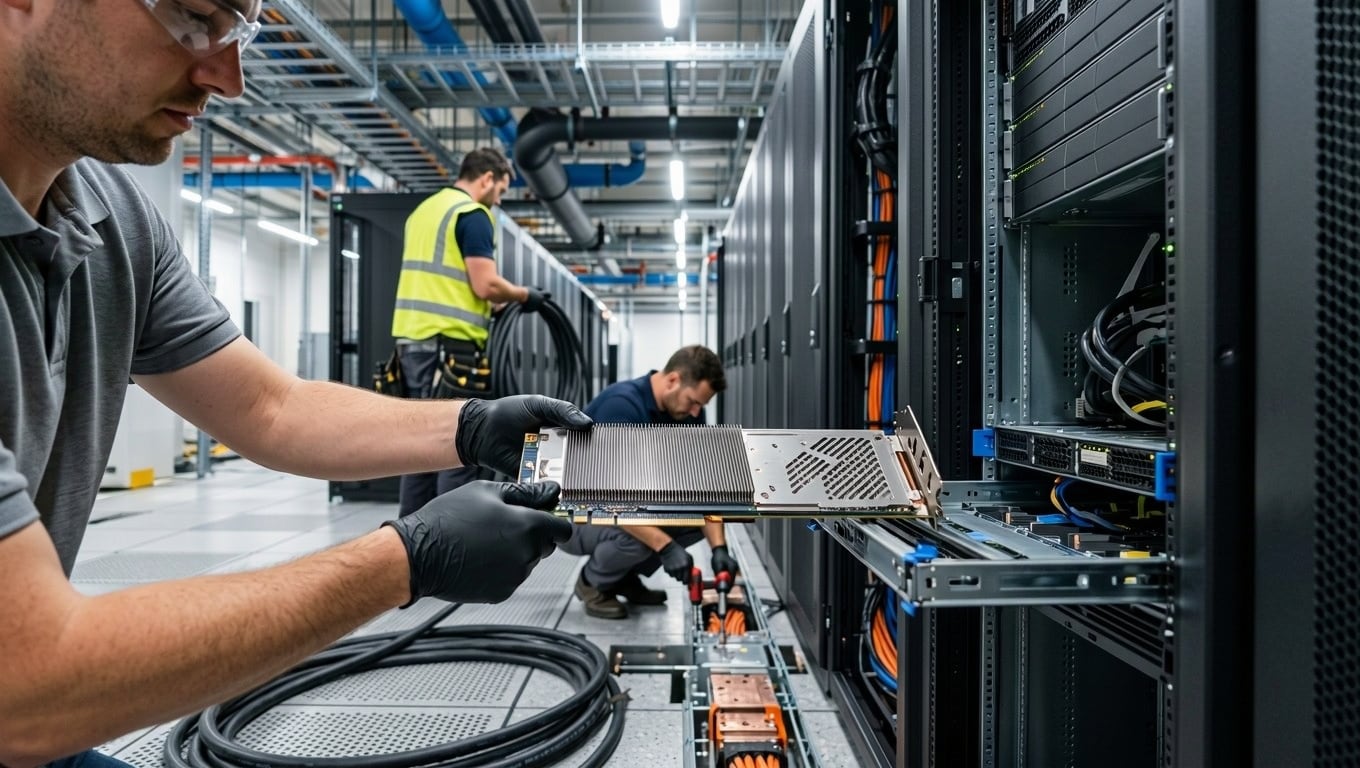
Lenders are backing a five-year lease-style arrangement for Nvidia AI chips, but they worry the hardware could end up in orbit, where it could be difficult or impossible to reclaim if SpaceX defaults.
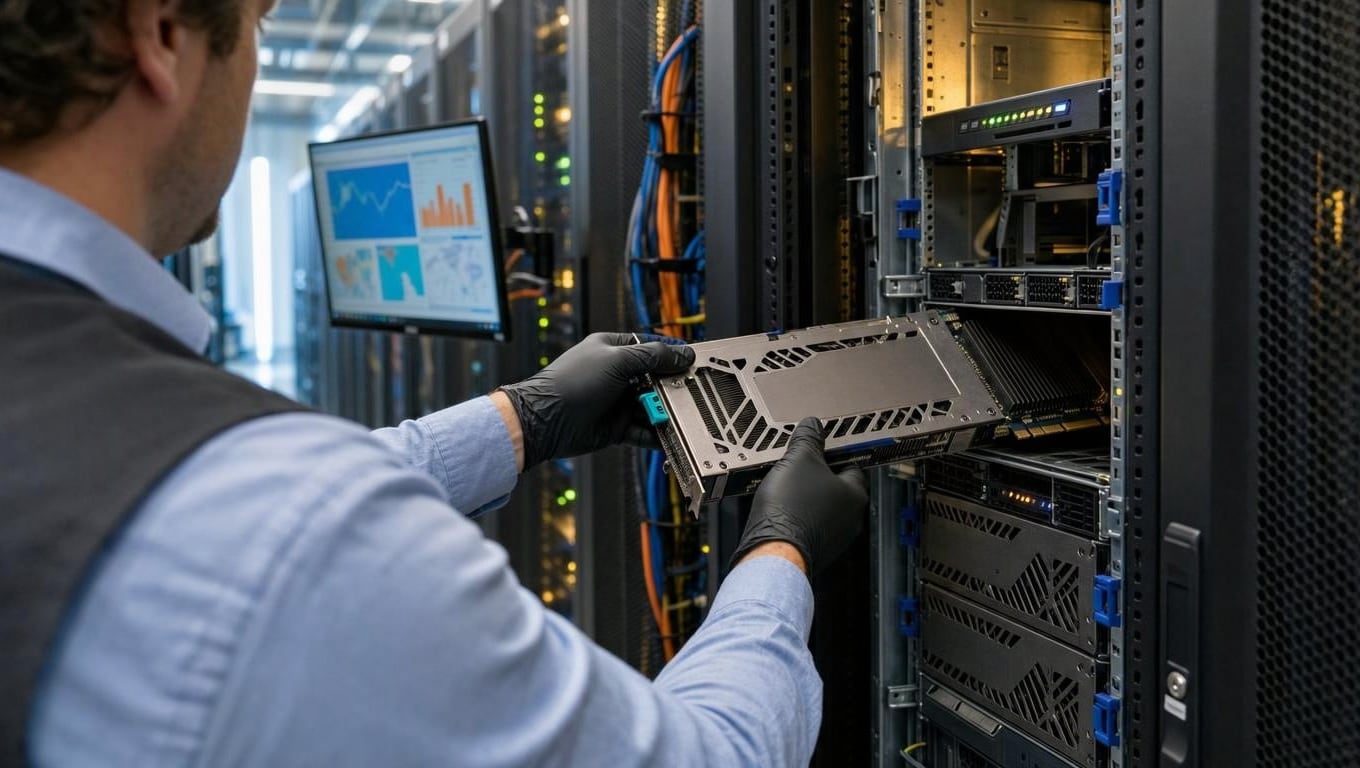 AI illustration
Why it matters
The structure shows how capital-intensive the AI build-out has become: SpaceX would commit to five years of payments on hardware it would not own, while lenders take on a new kind of risk — collateral that could leave the planet.
AnalysisSpaceX is entering a $43 billion lease-style arrangement for Nvidia AI chips, with the semiconductors serving as collateral, in a financing that lenders are backing while worrying about where the hardware might end up. Under the structure, a different company buys the chips and SpaceX makes quarterly payments to use them.
AnalysisThe vehicle is Saturn Funding Trust, a wholly owned subsidiary of asset-backed lending company WHCO, which would acquire the Nvidia GPUs for SpaceX. The arrangement is described as a five-year triple-net, hell-or-high-water finance lease: SpaceX must keep paying for five years whether the chips break, become obsolete or the project turns unprofitable, and it carries all the operating expenses.
AnalysisThe $43 billion 'Project Saturn' loan is not structured like a typical loan, so its investment-grade rating would remain unaffected, according to Tom's Hardware. It is built similarly to aircraft leasing agreements, in which a leasing company buys the jets and leases them to the airline that wants to use them. Tom's Hardware described the terms as very lender-friendly, as SpaceX essentially assumes all the risks while also keeping them off its books.
AnalysisA hell-or-high-water lease is one where the lessee pays regardless of what happens to the asset — the phrase means nothing short of high water excuses the obligation. Triple-net means the user covers costs such as maintenance and insurance.
AnalysisThe concern is orbital. Lenders are worried that SpaceX will use the chips for its planned orbital data centre, which would make it difficult, if not impossible, for creditors to reclaim them if the company defaults, Ars Technica reported. SpaceX has said it will deploy the collateralised chips only on Earth, but it remains unclear whether that provision is in the signed debt instrument. Moody's said in its report that the chips will be deployed in SpaceX's US data centres.
AnalysisSpaceX is working on data centres on Earth and in space. Musk has shown the company's first-generation AI1 satellite, with a 120-kilowatt payload and a span larger than a Boeing 747, and plans a $24-billion gas-powered AI supercomputer at Starbase, Texas, alongside the Colossus 1 and Colossus 2 sites near the Tennessee-Mississippi border.
AnalysisFor lenders, the arrangement trades conventional recovery rights for a lender-friendly payment obligation: SpaceX assumes the operating risk while the hardware sits outside its balance sheet. For SpaceX, the cost is a fixed five-year charge on chips it does not own, whatever happens to the AI projects they serve.
What it means
- What happened
- SpaceX arranged $43 billion of financing for Nvidia AI chips through a lease-style structure in which a WHCO subsidiary would buy the hardware and SpaceX would pay quarterly to use it.
- Why
- The chips are needed for SpaceX's data centre projects on Earth and in space, including a planned $24-billion gas-powered AI supercomputer at Starbase, Texas.
- Who benefits
- SpaceX gains use of the chips while keeping the obligation off its books and its investment-grade rating unaffected; lenders get a lender-friendly payment structure.
- Who loses
- Lenders carry the risk that the collateral leaves Earth and cannot be recovered if SpaceX defaults.
- Who is affected
- SpaceX, Nvidia, WHCO and Saturn Funding Trust, Moody's, and the lenders backing the arrangement.
- What to watch next
- It is not yet known whether the Earth-only deployment promise is written into the signed debt instrument.
- The background
- The arrangement follows SpaceX's existing Colossus 1 and Colossus 2 sites near the Tennessee-Mississippi border and its AI1 satellite plans.
Timeline
Tom's Hardware reports that lenders back SpaceX's $43 billion Nvidia GPU deal but worry the collateral could end up in orbit if Musk defaults.
Sources
Written with AI assistance from the sources listed above. Its numbers were checked against those sources and the article was proofread before publication. Not investment advice. How we work